Dyna-Gro® Foliage Pro 9-3-6
Complete liquid plant food for the growth stage
One concentrate covers the whole mineral requirement of a foliage plant: nitrogen, phosphorus and potassium in a 3-1-2 ratio, plus the calcium, magnesium and chelated trace elements that most plant foods leave to a second bottle. Measure a quarter teaspoon into a gallon of water and feed with every watering.
How Much Foliage Pro per Gallon of Water
A quarter teaspoon in a gallon covers ordinary houseplant feeding. Everything below that line is the same concentrate at a different strength, taken from the directions printed on the bottle.
| Use | Per 1 gallon | Notes |
|---|---|---|
| Maintenance feeding | 1/4 tsp per gallon | Apply with every watering. The usual starting point for houseplants. |
| Production feeding | 1 tsp per gallon | Weekly, for plants pushing new growth under strong light. |
| Production, spaced out | 2 tsp per gallon | Every 2 to 4 weeks instead of the weekly schedule above. |
| Foliar spray | 1/4 to 1/2 tsp per gallon | Sprayed on the leaves, then rinsed with plain water the next day so mineral residue does not sit on the surface. |
| Hydroponics, recirculating | 2 to 3 tsp per gallon | Reservoir systems where the same solution passes the roots repeatedly. |
| Hydroponics, non-recirculating | 1 tsp per gallon | Drain-to-waste and other systems where solution is used once. |
| Correcting a deficiency | 1 tsp per gallon | For rootbound or visibly deficient plants, for 2 or 3 waterings rather than permanently. |
Dilution ratios
1/2 tsp per gallon works out to 1:1500. An irrigation injector set to 1:100 takes 10 to 18 fl oz per gallon of stock solution, and 15 oz per gallon lands at roughly 100 ppm nitrogen. A syphon mixer at 1:15 takes 2 to 4 fl oz per gallon.
Never pour it neat
This is a concentrate. Undiluted product on a root zone is a salt problem, not a stronger feed. Measure into the water, stir, then apply. A cheap pipette or a 1/4 tsp measuring spoon removes the guesswork.
Move in small steps
Jumping from maintenance to the strongest published rate is how pots pick up salt. Raise the concentration only when the plant is visibly using what it already gets, and drop back when growth slows.
Every rate above is copied from the General Instructions panel on the back label, not estimated. Directions still vary between bottle sizes and label revisions, so where the container in your hand says something different from this page, the container wins.
What the 9-3-6 on the Label Means
Foliage Pro is 9% total nitrogen, 3% available phosphate and 6% soluble potash in the bottle, before any dilution.
3-1-2
The ratio underneath
Divide 9-3-6 by three and you get 3-1-2. University of Florida guidance for commercial foliage crops centers on that same proportion, in products such as 24-8-16 and 18-6-12. This is the professional foliage ratio at a strength that suits a liquid concentrate.
9-3-6 vs 10-10-10
Equal numbers are not more complete
A 10-10-10 product delivers the three macronutrients in equal parts, a poor match for a plant building leaves and stems rather than flowers or fruit. Foliage Pro sends three parts nitrogen for every one part phosphate.
9-3-6 vs 18-6-12
Same ratio, twice the concentration
Both reduce to 3-1-2. The difference is how much water each needs to reach the same final strength, which is why a bigger number on the front of a bottle proves nothing until you compare it against the rate per gallon.
The three headline numbers also leave out most of what a plant needs. Calcium, magnesium and the trace elements never appear in an N-P-K grade, which is why two fertilizers carrying identical numbers can feed very differently.
Guaranteed Analysis
Eleven declared nutrients in one concentrate. The four micronutrients that cause the most trouble in soilless systems, iron, manganese, zinc and copper, arrive chelated so they stay available in solution.
| Nutrient | Analysis |
|---|---|
| Total Nitrogen (N)2.9% ammoniacal, 6.1% nitrate | 9.0% |
| Available Phosphate (P2O5) | 3.0% |
| Soluble Potash (K2O) | 6.0% |
| Calcium (Ca) | 2.0% |
| Magnesium (Mg)all water soluble | 0.5% |
| Iron (Fe)chelated | 0.10% |
| Manganese (Mn)chelated | 0.05% |
| Zinc (Zn)chelated | 0.05% |
| Copper (Cu)chelated | 0.05% |
| Molybdenum (Mo) | 0.0009% |
| Cobalt (Co) | 0.0005% |
Derived from: ammonium nitrate, calcium nitrate, potassium nitrate, monoammonium phosphate, monopotassium phosphate, magnesium sulfate, molybdic oxide, copper EDTA, iron EDTA, manganese EDTA and zinc EDTA.
Net contents of the small bottle: 8 fl oz (236 mL), net weight 11 oz (310 g). Manufactured by Dyna-Gro in Richmond, California, and made in the USA.
Which Plants Foliage Pro Suits
Anything grown for its leaves rather than its flowers or fruit. A single complete concentrate covers a mixed collection better than a shelf of narrow supplements, though the dose still changes plant by plant.
Monstera
The 3-1-2 ratio matches what commercial foliage growers use, so a Monstera in active growth gets nitrogen for leaves and stems without an equal-parts formula. Fenestrations come from leaf maturity, light and climbing support. No dose changes that.
Philodendron
Fed as a dilute root drench during active growth. Fast climbers such as micans or Brasil handle more frequent feeding than a plant creeping along in low light, so pot size and growth rate set the schedule, not the species name.
Pothos and Syngonium
Both spend their whole indoor life producing vines rather than flowers, which is exactly the growth stage this formula targets. Start at 1/4 tsp per gallon and hold there unless the plant is visibly outrunning it.
Alocasia
Heavy feeders in warm months, close to dormant in cool ones. Alocasia in LECA or pon depends entirely on what is in the water, so the concentrate does more work there than it does in a bag of potting mix.
Variegated plants
Safe to use, and worth setting expectations: white and cream sectors hold less chlorophyll, and the pattern is genetic. Fertilizer feeds the green tissue and the new growth. It does not add variegation, and pushing a stronger dose to chase more of it only raises the salt load.
Herbs and leafy greens
Basil, mint, lettuce and similar crops stay vegetative for most of their productive life, which suits a nitrogen-forward complete feed. Follow the bottle label and any local rules that apply to food crops.
Where a different formula fits better
A plant being pushed into heavy bloom or loaded with fruit has a different nutrient demand during that stage. Foliage Pro can still feed many flowering plants, but the 3-1-2 ratio is built around leaves, stems and roots. Change the program when the crop changes its goal.
Soil, LECA, Pon and Hydroponics
The right concentration depends more on what the plant is growing in than on the species. A bag of fertilized potting mix and a jar of clay pebbles are two different starting points.
Potting soil and soilless mix
Check the bag first. A mix with controlled-release fertilizer already in it can supply plants for weeks after repotting, and adding a full liquid feed on top duplicates what is already there. Once that runs out, small regular doses hold the nutrient concentration steadier than occasional large ones.
LECA, pon and semi-hydro
Clay pebbles, pumice and mineral pon carry almost no nutrition of their own, so whatever the plant gets comes from the reservoir. That makes the dilution rate the whole feeding program. Tap water, RO water and distilled water all start at different mineral levels, which is why an EC meter tells you more here than a teaspoon does.
Hydroponics
Works as a one-part base nutrient through vegetative growth and for crops grown for their leaves. The label splits the rate by system type: 2 to 3 tsp per gallon recirculating, 1 tsp per gallon non-recirculating. Reservoirs drift as plants drink, so measure the solution instead of trusting the original mix.
Outdoor containers and beds
Nothing restricts this to houseplants. Ornamentals in the growth stage take the same feed. Switch programs when the crop switches goals, since a tomato loaded with fruit and a Monstera pushing leaves are not asking for the same thing.
Why an EC meter beats a fixed recipe
Electrical conductivity measures how much dissolved mineral is in the water. Two people can add exactly the same 1/4 teaspoon per gallon and land on different EC values, because hard tap water arrives loaded and RO water arrives near zero. For a large or expensive collection, a basic meter answers more questions than switching fertilizers ever will.
Bottle Sizes and How Far Each One Goes
An 8 fl oz bottle looks small on a shelf and holds roughly 48 teaspoons. At the maintenance rate that is around 192 gallons of feed water, which is why one bottle carries an ordinary indoor collection through months of watering.
| Size | Net weight | Makes at 1/4 tsp per gallon |
|---|---|---|
| 8 fl oz | 11 oz (310 g) | about 192 gallons |
| 32 fl oz | 44 oz (1.24 kg) | about 768 gallons |
| 1 gallon | 3.78 L | about 3,072 gallons |
| 5 gallon | 18.9 L | about 15,360 gallons |
Doubling the rate halves those figures: the 8 fl oz bottle makes about 96 gallons at 1/2 teaspoon and about 48 gallons at 1 teaspoon. Bottle life in practice comes down to how many pots you have and how big they are.
What Growers Say
Full disclosure: I grow succulents, and even then, only about 5-6 different kinds (aloe, gasteria, euphorbia, sansevieria). Most of my plants are small -- in 4" pots to 6" pots. Most are in a combination of cac...
Roberta Jay
Absolutely love this product, I have seen some amazing results from this product,it brought back big life to my suffering peace lily and have seen major growth in my pink princess philodendron and prince of ora...
S. Smith
I bought this "tiny" bottle back in July of 2025. I still haven't finished it all as this is highly concentrated and I recommend you use an EC meter with it and some sort of measuring pipet. I use this specific...
Cristina
I've been a long time user of Super thrive, ever since I heard about the evils of a company that rhymes with consanto and is literally everywhere. The regular super thrive is great in its own right and I used i...
Lauren Fulfer
It is an amazing fertilizer EOS, anyone saying the bottle is tiny needs to read the description!!! The bottle might be small but the product will last months used properly, thank you seller, will be ordering ag...
Ron watts
Great fertilizer. No issue. Got it off watching youtube planters. Highly recommend
Mike
Why the Bottle Says SUPERthrive
Order Dyna-Gro Foliage Pro today and a SUPERthrive-branded bottle arrives, carrying a badge that reads "Dyna-Gro Foliage-Pro is now SUPERthrive Foliage-Pro". Same formula, same 9-3-6 grade, same guaranteed analysis. Only the name on the front changed.
Dyna-Gro moved into the Green Garden Products portfolio, and Central Garden & Pet completed its acquisition of Green Garden Products in February 2021, naming both Dyna-Gro and SUPERthrive among the brands it picked up. The nutrient line was consolidated under SUPERthrive afterwards, which is why older white Dyna-Gro bottles and the current yellow packaging both still turn up in listings and photos.
The product itself predates all of that. The FOLIAGE-PRO trademark was filed by Dyna-Gro Corporation in 1994 and registered in 1995 for liquid plant food containing essential trace minerals, decades before the houseplant boom put it in front of a much larger audience.
Comparing two listings? Check the Foliage-Pro name, the 9-3-6 grade and the guaranteed analysis rather than the logo.
What Fertilizer Cannot Fix
Foliage Pro corrects a shortage of mineral nutrition. When something else is the limiting factor, feeding harder makes the situation worse rather than better.
Light comes first
Fertilizer supplies minerals. Light supplies the energy that turns them into a leaf. A Monstera in a dim corner cannot convert a stronger dose into a bigger leaf, and raising the concentration to compensate just leaves more salt in the pot.
Damaged roots cannot feed
Root rot, chronic overwatering and a compacted root ball all block uptake. A yellow leaf on a plant with failing roots is not a nitrogen shortage, and treating it as one makes the root zone worse.
Fertilizer burn is a dose problem
Once demand is met, extra concentrate raises the salt concentration around the roots. Browning leaf margins, stalled growth or a white crust on the surface are all worth investigating. Stop feeding, flush a freely draining pot with plain water, then restart lower.
pH decides what is available
A nutrient that is present but locked out by pH may as well be absent. This matters most in hydro and semi-hydro, where you control the solution directly. In an ordinary bag of commercial potting mix, adjusting pH without measuring first usually causes more trouble than it fixes.
Old damage does not heal
A torn, scorched or crisped leaf stays that way. Improvement shows up in the growth that comes after the change, so judge a feeding program by the new leaves and not by the old ones.
Feed the growth, not the calendar
A plant under grow lights can keep producing through January. A plant by a north window may stop in October. Same month, different nutrient demand. Watch for new leaves and expanding roots, and cut back when they stop.
Storage, Safety and Handling
Keep it closed and out of reach
Store the bottle tightly capped in a cool, dry spot away from children and pets. Avoid ingestion and unnecessary skin or eye contact, and wash after handling the concentrate.
If it freezes
The label covers this: dilute the unused portion with an equal amount of hot water, then use twice as much of the diluted product to compensate for the change in strength.
Molybdenum caution
The label carries a specific warning that this product contains molybdenum, and that forage crops high in molybdenum can be toxic to ruminant animals. Relevant if you grow anything that will be fed to livestock.
Disposal and local rules
Do not pour concentrated fertilizer into storm drains or waterways, since phosphorus runoff feeds algae. The bottle also carries a California Proposition 65 cancer warning, listed at P65Warnings.ca.gov.
Frequently Asked Questions
Dyna-Gro Foliage Pro 9-3-6 is a concentrated liquid fertilizer developed for plants grown primarily for foliage. It provides nitrogen, phosphorus and potassium in a 3-1-2 ratio, along with calcium, magnesium and trace minerals. The formula is commonly used for tropical houseplants, greenhouse crops, hydroponics and soilless growing systems.
Foliage Pro works well for many plants that spend most of their growing cycle producing leaves and stems. Common examples include Monstera, Philodendron, Pothos, Syngonium, Alocasia and many other tropical foliage plants. It can also be used for herbs, leafy crops, outdoor ornamentals and hydroponically grown plants when the nutrient ratio suits the crop.
For routine houseplant feeding, use approximately 1/4 to 1/2 teaspoon per gallon of water. Lower concentrations are generally more appropriate for continuous feeding, slower-growing plants or plants receiving moderate indoor light. Higher rates can be used for actively growing plants when conditions support greater nutrient demand. Always follow the directions printed on the specific bottle if they differ.
Yes. Foliage Pro can be used as a dilute continuous-feed fertilizer. A common starting rate is 1/4 teaspoon per gallon with regular watering. Plants growing slowly, receiving limited light or already planted in fertilized potting mix may need less frequent feeding. The correct schedule depends on actual plant growth rather than a fixed calendar.
Yes. Foliage Pro 9-3-6 contains 2% calcium and 0.5% magnesium, a 4:1 ratio in the concentrate. Calcium goes into developing plant tissue, and magnesium sits at the center of the chlorophyll molecule, so a plant cannot photosynthesize normally without it. For many houseplants that means a separate Cal-Mag supplement is unnecessary. Reverse-osmosis water, unusual hydroponic systems and crops with specific demands can justify one, but adding it out of habit pushes the solution away from the balance the formula was built around.
Yes. Monstera and Philodendron are among the plants most closely aligned with the formula’s intended use. The 9-3-6 analysis reduces to a 3-1-2 nutrient ratio, a ratio widely used for foliage production. Fertilizer can support active leaf and stem growth, but mature leaf size and development still depend heavily on light, healthy roots and appropriate growing conditions.
Yes. Variegated Monstera, Philodendron and other variegated foliage plants can be fertilized with Foliage Pro. The fertilizer supports normal mineral nutrition, but it does not create or increase variegation. White, cream or yellow patterning is primarily determined by the plant’s genetics and the stability of its variegation.
Yes. Foliage Pro can be used in LECA, pon and other inert or low-nutrient substrates. Because these media provide little nutrition themselves, the plant depends more heavily on the nutrient solution. Concentration should be adjusted to the plant, water quality and growing system rather than automatically using the maximum label rate. Growers managing larger semi-hydro collections may also monitor EC and pH.
Yes. Foliage Pro can function as a one-part nutrient during vegetative growth and for crops grown mainly for foliage. The label lists 2 to 3 teaspoons per gallon for recirculating systems and 1 teaspoon per gallon for non-recirculating systems. Hydroponic growers should account for the mineral content of their starting water and monitor the nutrient solution instead of relying only on a fixed teaspoon-per-gallon recipe.
No. Foliage Pro is a mineral fertilizer rather than an organic fertilizer. Its nutrients are supplied in soluble forms that become available in the irrigation solution after dilution. Growers specifically requiring certified organic inputs should choose a fertilizer carrying the relevant organic certification.
Yes. The nitrogen in Foliage Pro comes from nitrate and ammoniacal forms rather than urea. The 9% total nitrogen analysis includes 6.1% nitrate nitrogen and 2.9% ammoniacal nitrogen, and the label derives that nitrogen from ammonium nitrate, calcium nitrate and potassium nitrate. Both forms are soluble and available as soon as the concentrate is diluted, with no conversion step needed in the pot. Skipping urea does not make the product impossible to overapply, since concentration still decides that.
An 8 fl oz bottle contains approximately 48 teaspoons of concentrate. At 1/4 teaspoon per gallon, it makes about 192 gallons of fertilizer solution. At 1/2 teaspoon per gallon, it makes about 96 gallons. Actual bottle life depends on the number of plants, container sizes and feeding concentration.
Dyna-Gro became part of the Green Garden Products portfolio and was later incorporated into the SUPERthrive product family following the acquisition of Green Garden Products by Central Garden & Pet. As a result, Foliage Pro may appear in older Dyna-Gro packaging or newer SUPERthrive-branded packaging. When comparing versions, check the Foliage-Pro name, 9-3-6 analysis and guaranteed nutrient composition rather than relying only on the logo.
Foliage Pro has been associated with Dyna-Gro for decades. The FOLIAGE-PRO trademark was filed by Dyna-Gro Corporation in 1994 and registered in 1995 for liquid plant food containing essential trace minerals. The product therefore predates the modern houseplant boom by many years and originated from a broader professional and specialty growing market.
Foliage Pro is built around a 9-3-6 analysis rather than an equal-number formula such as 10-10-10 or 20-20-20. That gives it a 3-1-2 ratio with proportionally more nitrogen and potassium than phosphorus, which suits many foliage-growing applications. It also includes calcium, magnesium and trace minerals in the same concentrate. The advantage is not simply a higher fertilizer number. It is the nutrient balance and the ability to deliver a complete mineral feed from one measured liquid concentrate.
More for Your Home and Garden
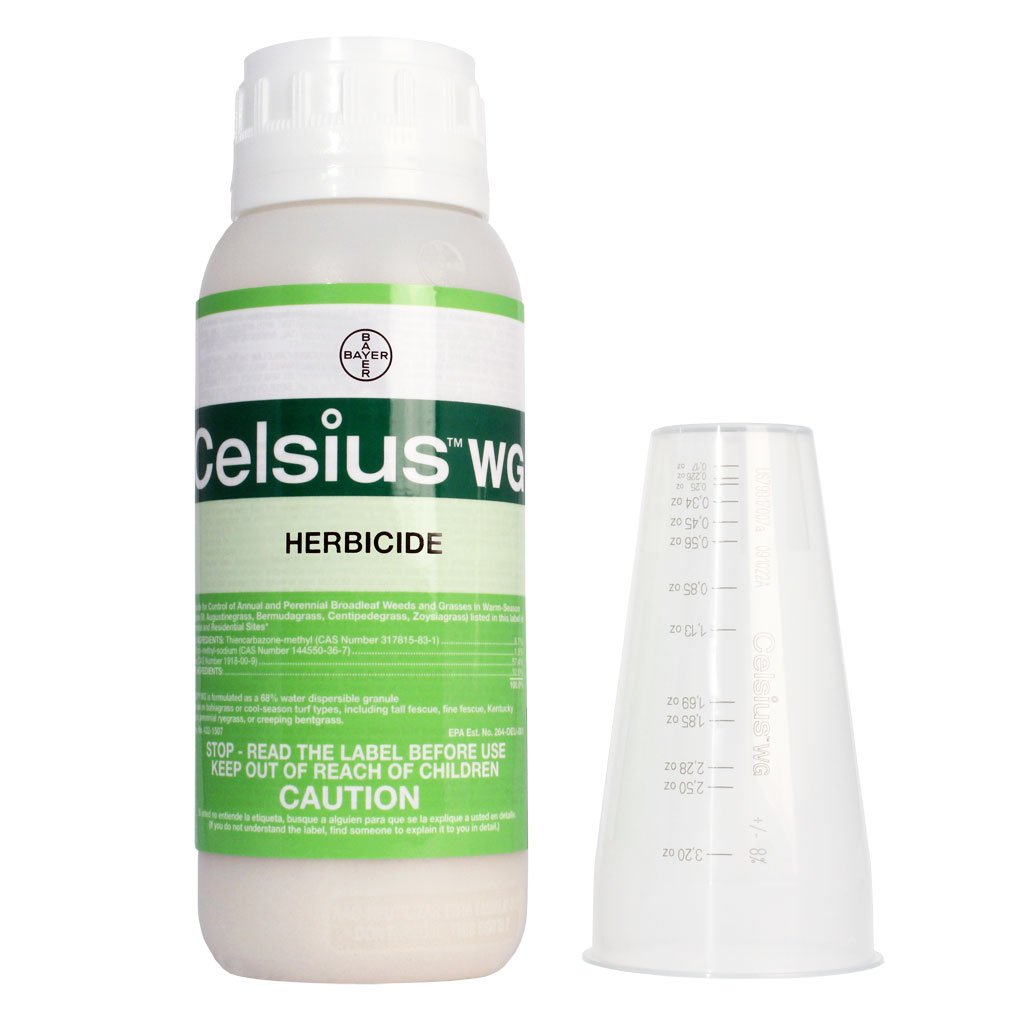
Celsius WG Herbicide
Selective weed control for established warm-season lawns. A different job entirely: it clears broadleaf and grassy weeds out of St. Augustine, Bermuda and Zoysia turf, and feeds nothing.
Visit website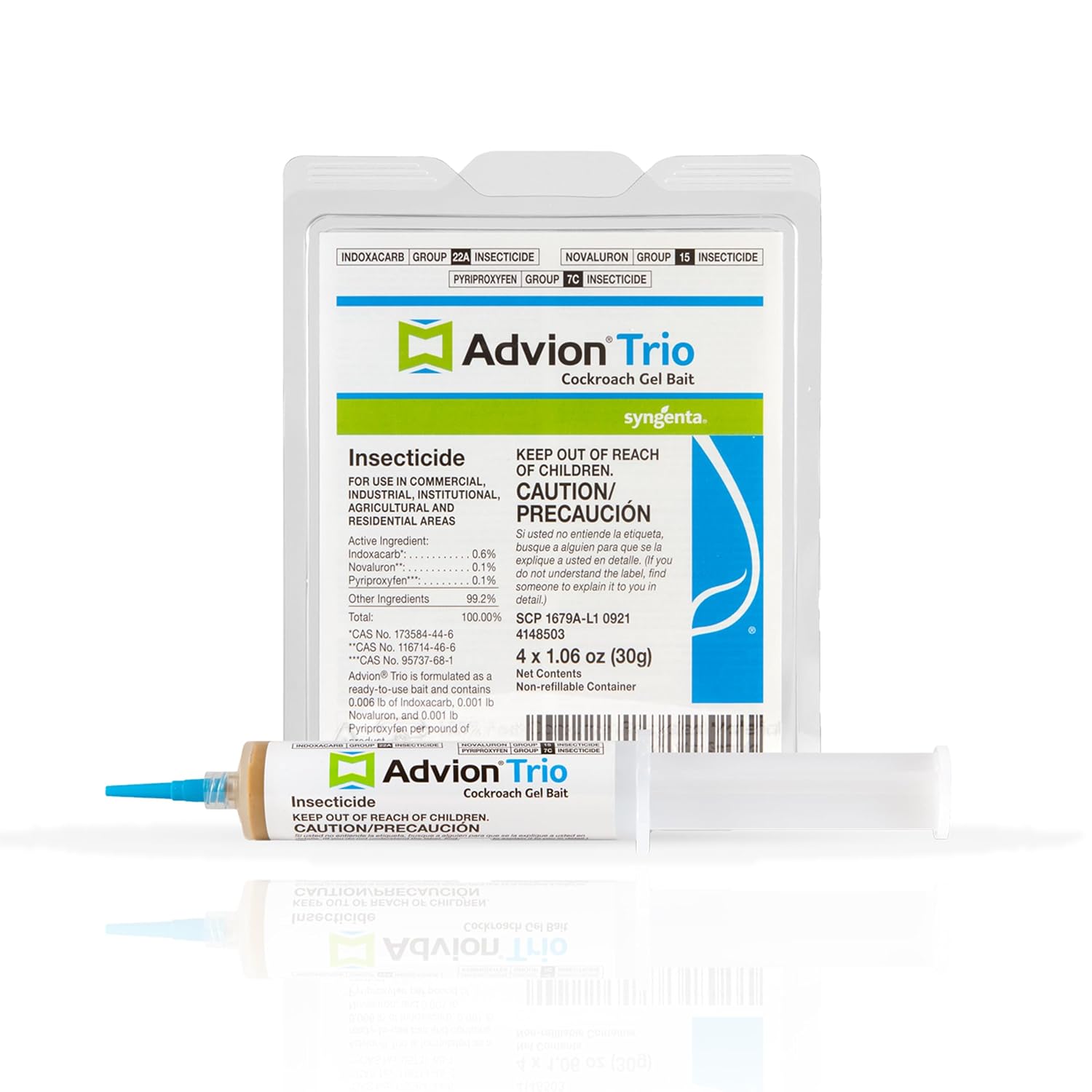
Advion Cockroach Gel Bait
An indoor bait for German and American roaches, placed in cracks and cabinet hinges rather than sprayed. Same house, nowhere near the same shelf as plant food.
Visit website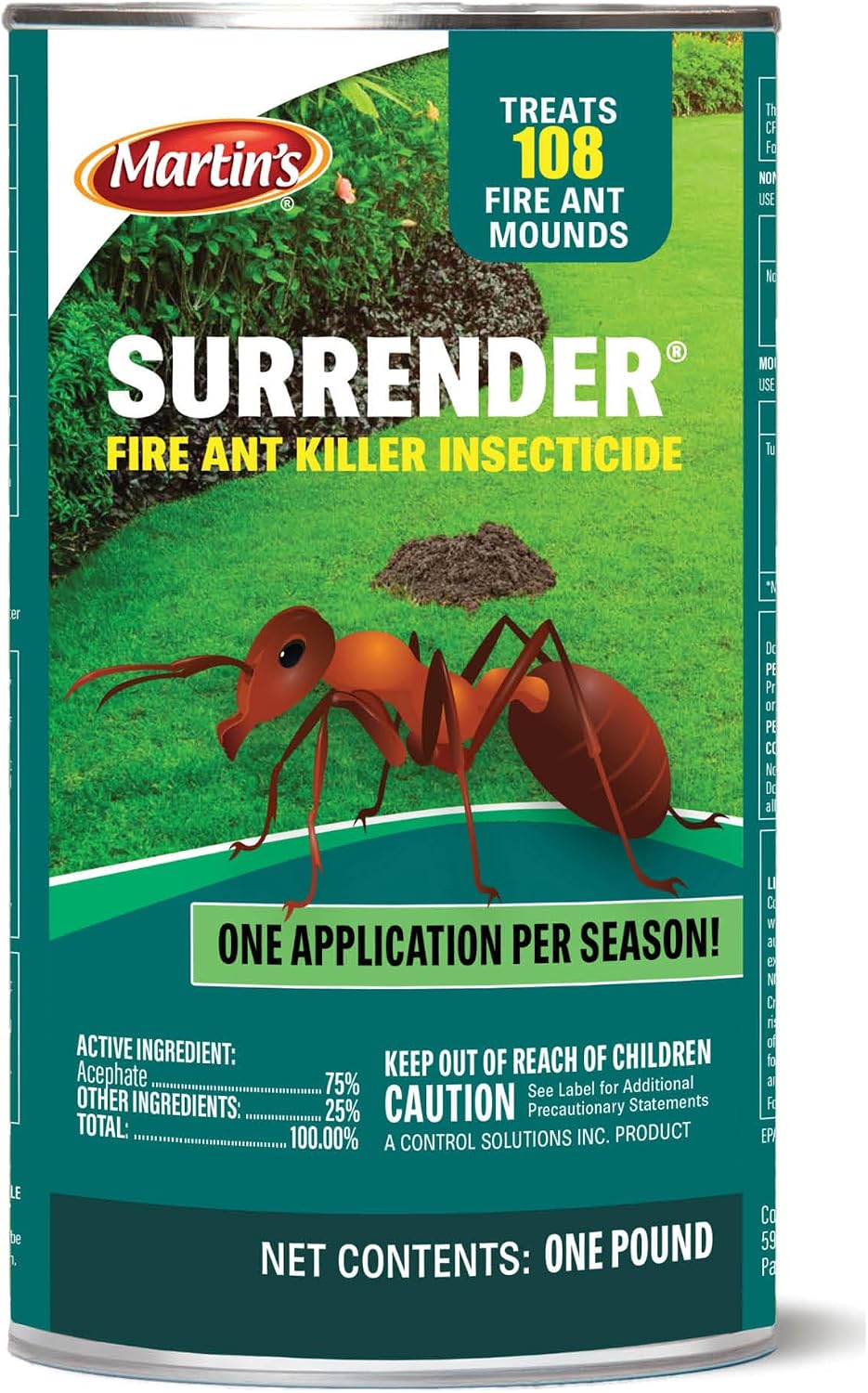
Surrender Fire Ant Killer
An acephate dust for treating fire ant mounds outdoors. Worth knowing if your potted plants summer on a patio in the South, since mounds turn up inside containers too.
Visit websiteFeed the Growth You Actually Have
Start at a quarter teaspoon per gallon, watch the new leaves, and raise the rate only when the plant is clearly using what it gets.
Shop Foliage Pro on Amazon